
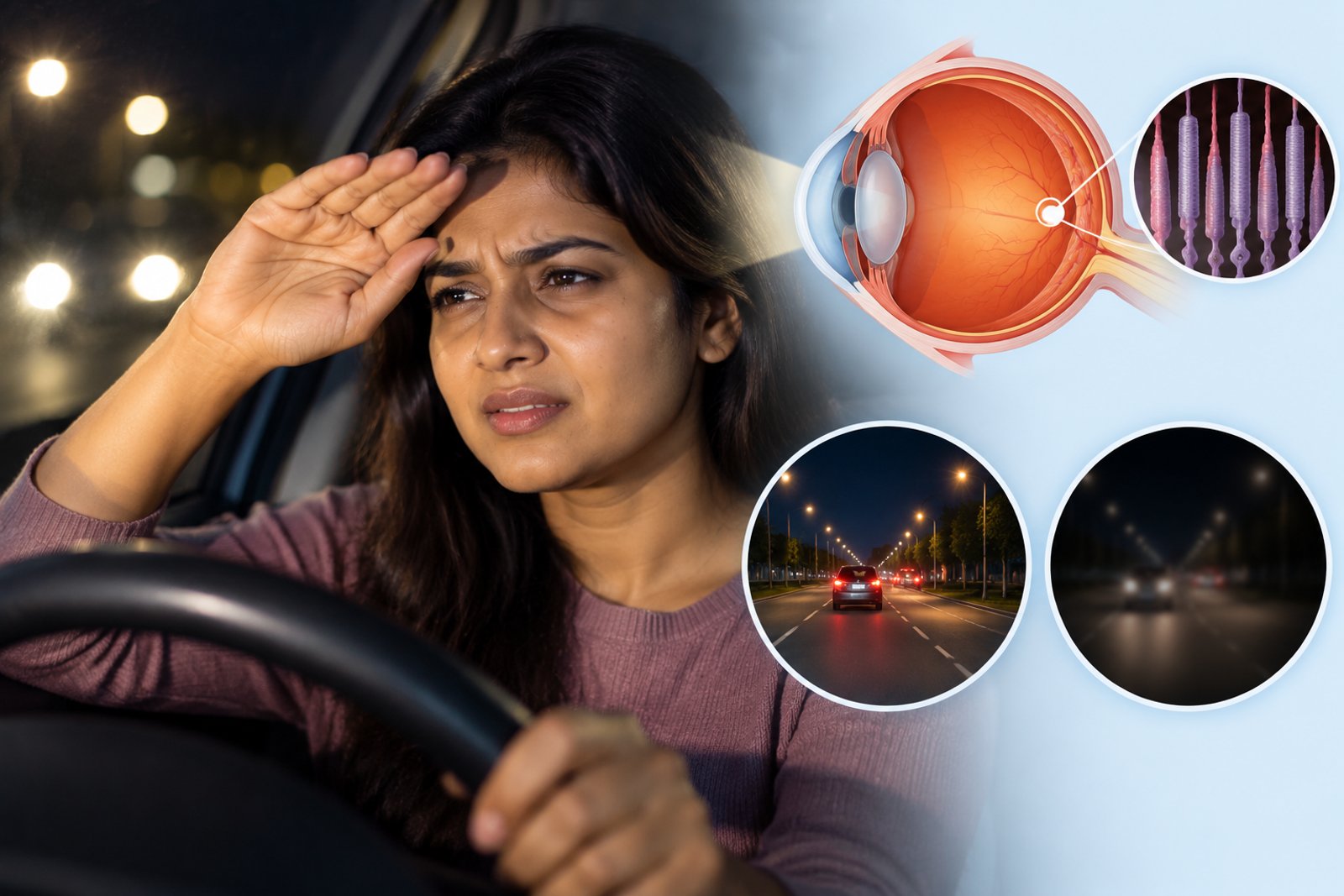
What Is Night Blindness?
Night blindness is a condition that makes it hard to see in low light or darkness. Many people notice it when driving at night or walking in dim places. While some people call it “nyctalopia,” most just say night blindness. This problem can affect anyone, but it is more common in older adults. According to the World Health Organization, vision problems like night blindness can impact daily life and safety. Because of this, it is important to understand what causes night blindness and how to manage it.
Common Symptoms of Night Blindness
People with night blindness often notice changes in their vision, especially in dark settings. For example, you may find it hard to adjust when lights are turned off. In addition, you may struggle to see road signs or people at night. Some common night blindness symptoms include:
However, not everyone will have all these symptoms. If you notice any of these signs, you should talk to an eye doctor.
Causes of Night Blindness
There are several causes of night blindness. Sometimes, it is due to changes in the eye as people age. In other cases, it is linked to health problems or a lack of certain vitamins. For example, a shortage of vitamin A, which helps keep eyes healthy, can lead to night blindness. Other causes of night blindness include:
Because there are many causes of night blindness, it is important to find out the reason in each person.
How Night Blindness Is Diagnosed
Doctors use several steps to diagnose night blindness. First, they will ask about your symptoms and health history. Next, they will check your eyes with special lights and tools. For example, they may use a test called a “visual acuity test” to see how well you can read letters in different lighting. In some cases, doctors may use eye drops to widen your pupils. This helps them look at the back of your eye, called the retina. Sometimes, blood tests are needed to check vitamin levels or rule out other health problems. Because early diagnosis can help prevent vision loss, it is important to see a doctor if you notice changes in your night vision.
Treatment Options for Night Blindness
Treatment for night blindness depends on its cause. If a vitamin A shortage is the reason, doctors may suggest vitamin supplements or changes in diet. For cataracts, surgery to remove the cloudy lens can help restore vision. If medicine is causing the problem, your doctor may adjust your prescription. In cases of genetic conditions, treatment may focus on slowing vision loss and protecting eye health. Although not all causes can be cured, many people find that treatment improves their night vision. According to the CDC, early care can make a big difference.
Lifestyle Tips for Managing Night Blindness
Living with night blindness can be challenging, but some tips can help you stay safe and comfortable. For instance, you can:
Because each person is different, you may need to try different tips to see what works best.
Prevention of Night Blindness
While not all cases of night blindness can be prevented, some steps can lower your risk. For example, eating foods rich in vitamin A, such as carrots, sweet potatoes, and leafy greens, can help protect your eyes. In addition, regular eye exams can catch problems early. If you have diabetes or other health issues, managing them well can also reduce your risk. Because some causes are genetic, you may not be able to prevent all cases. However, healthy habits and early care can make a big difference in eye health. Consult Dr. Pallavi Gupta Reddy if you are having sings of night blindness.