
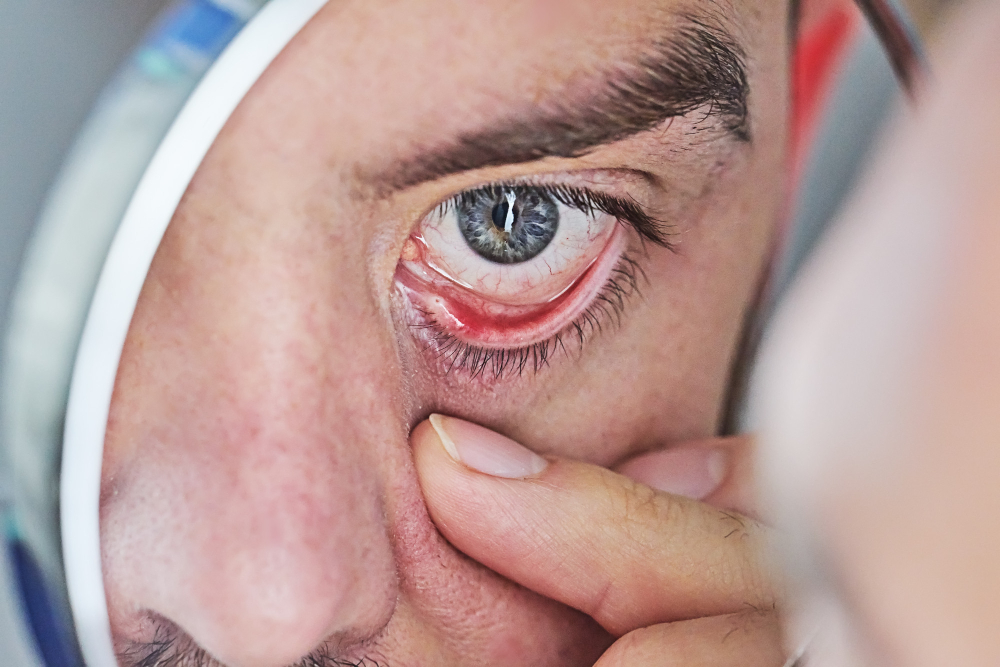
What Is a Corneal Ulcer?
A corneal ulcer is a sore or open wound on the clear front part of your eye, called the cornea. The cornea helps you see clearly by letting in light. When you have a corneal ulcer, this area becomes damaged. As a result, your vision can get blurry or you may feel pain. Many people think of a corneal ulcer as a type of eye infection. However, not all ulcers are caused by germs. Sometimes, injury or other problems can also lead to a corneal ulcer. According to the World Health Organization, corneal ulcers are a leading cause of vision loss worldwide. Because of this, it is important to know the signs and get help early.
Common Symptoms of Corneal Ulcers
Corneal ulcers can cause many symptoms. Early treatment can help prevent serious problems. Therefore, knowing what to look for is important. Common signs and symptoms include:
Sometimes, you may also notice a white or gray spot on your cornea. If you have any of these symptoms, it is best to see an eye doctor soon. Quick care can help save your vision.
Main Causes of Corneal Ulcers
Many things can cause a corneal ulcer. Most often, germs like bacteria, viruses, or fungi infect the cornea. For example, wearing contact lenses for too long can raise your risk. In addition, injuries or scratches to the eye can let germs in. Here are some main causes:
According to the CDC, people who use contact lenses should be extra careful. Proper cleaning and not sleeping in lenses can lower your risk. In some regions, like rural areas, eye injuries from plants are a common cause. Because causes can vary, knowing your risk helps you protect your eyes.
How Corneal Ulcers Are Diagnosed
Doctors use several steps to find out if you have a corneal ulcer. First, they will ask about your symptoms and eye history. Next, they will look at your eye with a special light. Sometimes, doctors use a dye called fluorescein. This dye helps them see the ulcer more clearly. In some cases, they may take a small sample from your cornea. This helps find out what type of germ is causing the problem. Quick diagnosis is important. That way, you can start the right treatment and avoid lasting damage.
When to Seek Eye Care for a Corneal Ulcer
It is important to get help quickly if you think you have a corneal ulcer. Early care can stop the infection from getting worse. You should see an eye doctor right away if you notice:
For example, if you wear contact lenses and have eye pain, remove your lenses and seek care. In many cities, you can find corneal ulcer treatment at local eye clinics. Do not wait, as quick treatment can help save your sight.
Prevention Tips for Corneal Ulcers
There are simple steps you can take to lower your risk of a corneal ulcer. Because prevention is easier than treatment, these tips can help keep your eyes healthy:
For people living in areas with high rates of eye infection, extra care is needed. Following these tips can help prevent corneal ulcers and protect your vision.