
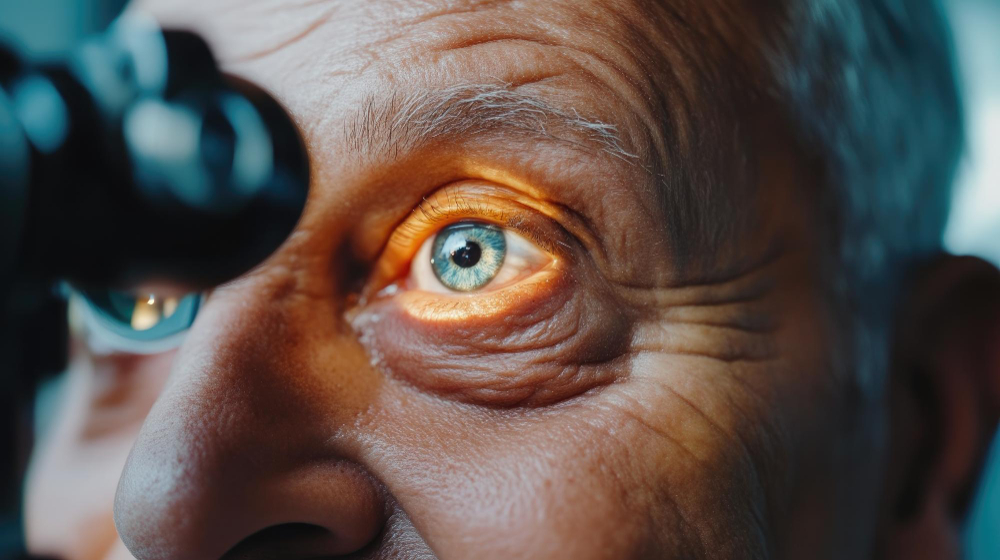
What is Age-Related Macular Degeneration (AMD)?
Age-related macular degeneration is a common eye condition. It mostly affects people over 50 years old. In this condition, the macula, which is the center part of the retina, gets damaged. Because of this, people lose sharp, central vision. This makes it hard to read, drive, or see faces clearly. Although AMD does not cause complete blindness, it can make daily tasks more difficult. According to the CDC, AMD is a leading cause of vision loss in older adults.
Symptoms of AMD
At first, AMD may not cause any symptoms. However, as the disease gets worse, changes in vision can appear. For example, straight lines may look wavy or blurry. Over time, central vision may become fuzzy or dark. But side vision usually stays normal. Common AMD symptoms include:
Because these symptoms can develop slowly, regular eye exams are important.
Causes and Risk Factors
While the exact cause of age-related macular degeneration is not fully known, several risk factors can increase your chances. For instance, aging is the main risk factor. In addition, genetics play a role. If you have a family member with AMD, your risk is higher. Other risk factors include:
Because some risk factors are changeable, making healthy choices may help lower your risk.
How AMD is Diagnosed
Eye doctors use several tests to diagnose AMD. First, they will ask about your vision and family history. Next, they will examine your eyes. Often, doctors use a special lens to look at the back of your eye. In addition, they may use these tests:
Because early diagnosis can help slow vision loss, regular eye exams are important, especially for adults over 50.
Treatment Options for AMD
Currently, there is no cure for age-related macular degeneration. However, treatments can slow its progress and help manage symptoms. The type of treatment depends on whether you have dry or wet AMD. Dry AMD is more common and tends to progress slowly. Wet AMD can cause faster vision loss but may respond better to treatment. Treatment options include:
Because treatment is most effective when started early, seeing your eye doctor regularly is key.
Lifestyle Tips for Living with AMD
Although AMD can change your daily life, many people find ways to adapt. For example, using good lighting at home can help you see better. In addition, using magnifiers or large-print books can make reading easier. Here are some helpful tips:
Because support is important, consider joining a local or online support group for people with vision loss.
Prevention Strategies for AMD
While you cannot change your age or family history, you can take steps to lower your risk of age-related macular degeneration. For instance, eating a healthy diet rich in leafy greens and fish may help. Also, wearing sunglasses that block UV rays can protect your eyes. Prevention tips include:
Because early action can make a difference, talk to your doctor about your risk for AMD.
Conclusion
If you notice changes in your vision or have concerns about age-related macular degeneration, schedule a consultation with Dr. Pallavi Gupta Reddy. Early care can help protect your eyesight and support your daily life.